

This post was updated May 17 at 8:10 p.m.
MUNA released an album. “So What”?
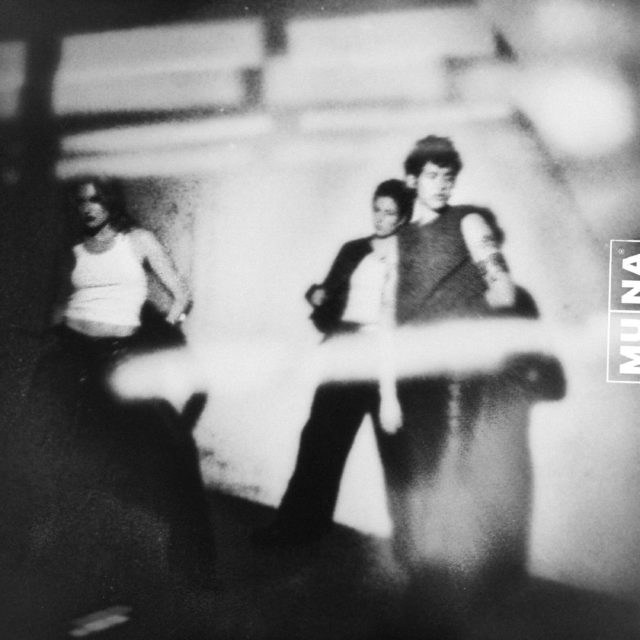
In its newest record, “Dancing On The Wall,” the synth-pop music group sounds liberated yet creatively adrift. For its fourth studio album, released May 8, the band substituted its classic romantic yearning with a sentiment far more detached: flirtation without intimacy, longing without devastation and lyrics without memorability. The 13-song record is sleek, restless and intermittently exhilarating, yet it often feels caught in an uncomfortable middle ground – neither euphoric enough to work as pop escapism nor emotionally incisive enough to rival the vulnerability of MUNA’s earlier work. With about 1.7 million monthly listeners on Spotify and tour experience with Taylor Swift and Harry Styles, MUNA’s reputation as an acclaimed queer indie-pop band does not shine through in “Dancing On The Wall.”
The trio – consisting of Katie Gavin, Josette Maskin and Naomi McPherson – was initially formed in 2013 and is known for hits such as “Silk Chiffon,” “I Know A Place” and “It’s Gonna Be Okay, Baby.” Returning to the music scene after its 2022 self-titled album, MUNA says the new tracks “channel the anxious, uncertain energy of living in a Los Angeles defined by political tension, environmental decay, and the quiet pressures of millennial precarity.”
That tension is immediately apparent in the album’s opening stretch, which also happens to be its strongest. “It Gets So Hot” launches the record with frenetic momentum and playful lyricism, establishing the album’s fixation on lust, irony and emotional fluster. The track is undeniably fun, though its pacing and faulty lyrics occasionally become distracting. Several half-rhymes feel overwritten, drawing attention to their construction rather than the core of the song. Even so, the track’s campy theatricality makes for an entertaining opener, despite an ending that fizzles a bit.
The title song is where the album truly matures into something compelling. “Dancing On The Wall” transforms romantic desperation into something shimmering and danceable, pairing a buoyant beat with some of the album’s most emotionally effective writing. Gavin’s falsetto glides over glittering production, particularly during the bridge, where the song becomes almost celestial in its twinkling intensity. Lyrics like, “I would wait forever as long as I’m waitin’ for you” evoke the obsessive yearning MUNA historically excels at depicting. Unlike other tracks, which seem afraid of forthright sincerity, “Dancing On The Wall” embraces emotional messiness without burying it beneath irony.
[Related: Album review: Kacey Musgraves lassos listeners back in with fresh lyrics on ‘Middle of Nowhere’]
Unfortunately, the album rarely reaches that level of excitement again. Much of “Dancing On The Wall” feels curiously noncommittal, as though MUNA is deliberately resisting the emotional devastation that made its previous chart-topping songs resonate so deeply. Instead, the trio spends much of this record chronicling casual encounters and emotionally evasive relationships, often with diminishing returns. The album’s fixation on detached coolness ultimately weakens its emotional impact, leaving several songs feeling oddly hollow despite their relatively polished production.
“Eastside Girls” exemplifies both the album’s strengths and limitations. Its expansive chorus is immediately infectious, and the song’s coast-to-coast romanticism feels knowingly playful, leaning into certain stereotypes with charm and humor. Yet the production itself feels frustratingly familiar, as though the band is recycling sonic textures that countless indie-pop acts have already exhausted. The bridge, which bears a nearly uncanny resemblance to “We Didn’t Start the Fire” by Billy Joel, borders on distracting. Still, the song gradually reveals itself with repeated listens, largely because its melodic hooks are strong enough to compensate for its lack of innovation.
Inconsistency defines much of the album’s middle. “On Call” is sweet but underwhelming, coasting on danceable without nearing earworm status. Likewise, “Mary Jane” is accurately titled, as it sticks to the standard pop blueprint without introducing new themes or exciting soundscapes. “So What,” meanwhile, succeeds because of its compelling portrayal of heartbreak and denial. The song leaves listeners wondering what MUNA is actually ambivalent about: moving on from a previous relationship or gaining new prospects while still wanting a past love. Still, like several other tracks, it overstays its welcome with an unnecessarily long outro that drains its momentum.
The album reaches its lowest point with “Party’s Over” and “…Unless,” two skeletal interludes that feel bafflingly unnecessary. Neither track contributes a meaningful atmosphere or thematic cohesion, making their inclusions especially perplexing on an already brief album. MUNA has consistently excelled at constructing emotionally immersive albums, which makes these blip-like transitions feel particularly uncharacteristic. Instead of deepening the listening experience, they simply take up precious real estate.
[Related: Album review: Noah Kahan’s ‘The Great Divide’ explores roots and stardom lyrically, sonically]
Yet even amid the album’s unevenness, moments of brilliance find ways to emerge. “Big Stick” stands as the record’s most provocative track, embracing satire with a confidence that much of the record otherwise hesitates to sustain. Framed through an Orwellian Big Brother perspective, the song transforms political commentary into sleek, seductive pop, blurring the line between consumer desire and ideological conditioning. As Gavin darkly repeats, “I can make you want anything that I want you to,” the song expands from playful materialism into something far more relevant – linking internet trends, surveillance culture and American imperialism with commendable wit. Even when its messaging borders on absurdity, the song’s duality and weaponization of aesthetics become its greatest strengths, allowing it to operate as both biting social critique and irresistibly campy pop spectacle.
“Girl’s Girl” is arguably one of the best developed songs of the record, aside from the first singles. Cutting, campy and consistently funny – “Thought of stealing your love, but you give it for free / Now I’m hearin’ all about it from your menagerie” – the song recalls the cunning jabs that often make MUNA’s songwriting feel honest. The lyrics balance humor with emotional volatility, while the song’s biting, gossip-driven perspective feels delightfully venomous. “Girl’s Girl” is one of the few moments on the album where MUNA sounds fully confident in its identity rather than experimenting with emotional detachment for its own sake.
“Dancing On The Wall” is a frustrating album. It captures a band in transition, experimenting with irony, eroticism and emotional ambiguity while struggling to shift from the vulnerability that once defined its music. At its best, the album is clever, intoxicating and sharply self-aware – socially conscious and fun for listeners familiar with LA. At its worst, it feels emotionally evasive and strangely unfinished.
For a band capable of outstanding emotional clarity, mediocrity feels far more disappointing than outright failure.


Comments are closed.