From a Koreatown karaoke bar to Mojave highways, five short films celebrating the Asian and Pacific Islander community arrived at UCLA on May 8.
The annual API Film Night returned for its fourth year at the James Bridges Theater, held by the UCLA School of Theater, Film and Television. The event host, co-founder and TFT alumnus Merry May Ma, opened with remarks lauding cinema as a sanctuary amid challenging times for the Asian and Pacific Islander community. With a diverse lineup exploring themes of love, loss and the in between, Ma thanked the crowd for more than 400 RSVPs, welcoming both returning and first-time attendees.
“I see people who came to the first year came back,” Ma said. “It’s good to see the fans, community growing and coming back and supporting.”
The evening opened with “The Marvelous Light on Falling Water,” directed by fourth-year art student Christian Lee. Set in Koreatown, the story follows a young woman and her partner as they navigate her mother’s detention by immigration authorities and forced departure from the United States.
[Related: Spring Sing 2026 showcases student artistry as ScatterTones, Synthesis win awards]
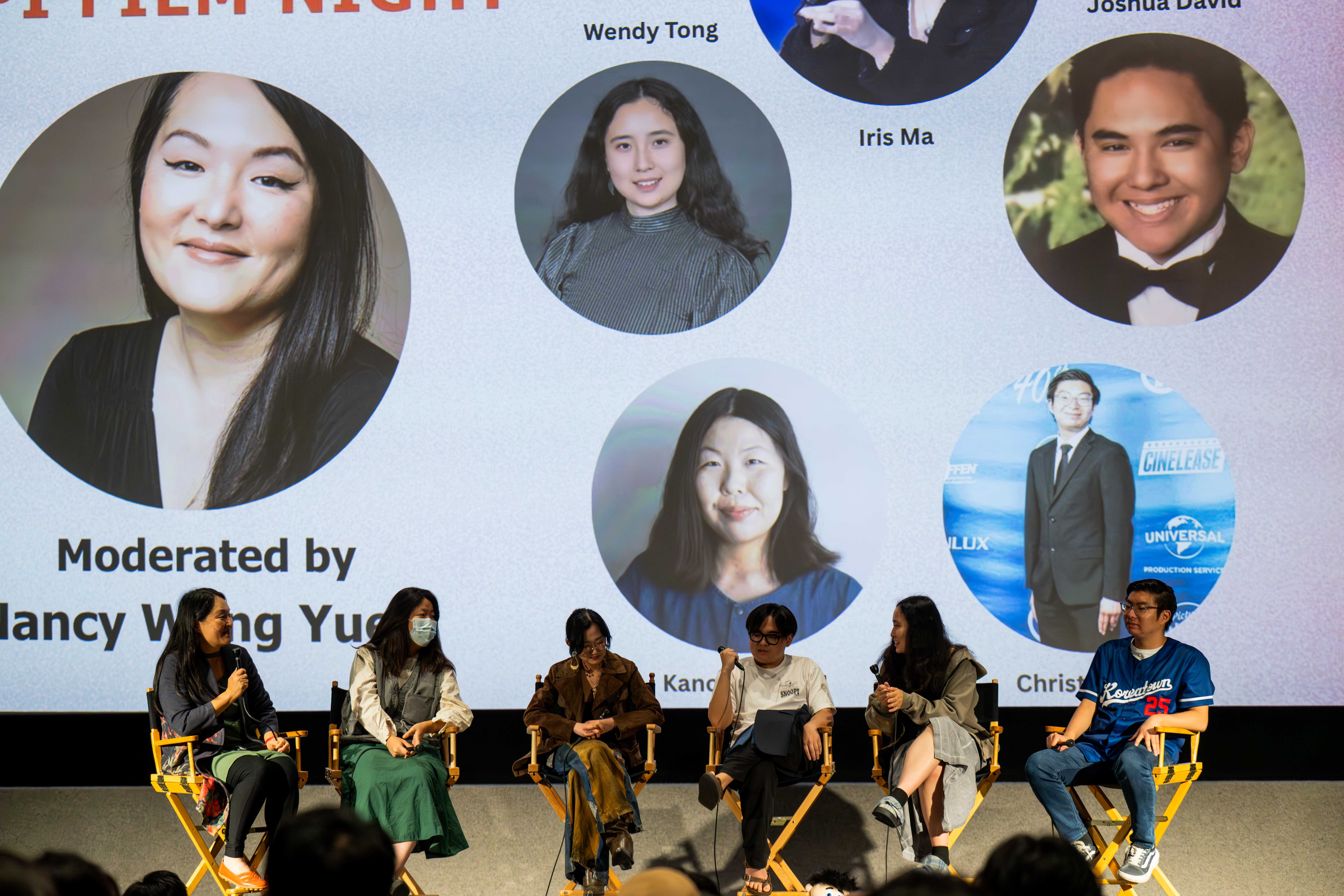
During the post-screening Q&A panel, Lee told moderator Nancy Wang Yuen his film grew from his desire to document stories of communities often left out of mainstream cinema. On stage in a blue jersey with “Koreatown” stitched across his chest, Lee said he hopes to point his camera toward the communities that first shaped him.
“Our communities and families are not photographed,” Lee said. “I was inspired by the LA rebellion movement that came before me, the Black, Asian and Latino filmmakers who … brought a camera into their communities to tell honest stories.”
The second short, “Chowmein Holiday,” was a genre-melding Western directed by UCLA MFA alumnus Iris Lanhua Ma. Opening with traditional Chinese illustrations before cutting to two grandmothers smoking in an all-American diner, the film brought audiences to rapturous cheer as the gunslinging duo sped through police chases and back-alley brawls. Ma said the film took shape during the COVID-19 pandemic after she saw a surge in discrimination against Asian Americans.
“I had the idea of making this film as a sort of revenge to that narrative,” Ma said. “We’re not your model minority.”
The program then screened the first documentary short of the night. “Still Here, Still There,” by graduate student in fine arts Wendy Tong, following the story of her aunt Zhu Fang, who immigrated to the United States and left her family behind in China. During one scene, the audience broke into laughter as a dog wandered into frame and sniffed the camera while Zhu Fang prepared dinner. Moments later, the theater fell quiet as she smiled through tears during a FaceTime call with her son an ocean away.
Ma said this year’s lineup intentionally expanded from the narrative-heavy curation of previous years. The evening continued with “Until 100 Years,” a documentary by Kano Umezaki, a graduate student in fine arts, which centers around her aging father and his post-stroke recovery. Umezaki said the creation of the personal documentary forced her to confront years of resentment, which soon evolved into forgiveness during the process of making the film.
[Related: Open Mind Film Festival showcases high schooler-made films on mental health]
The final short of the evening, “How to Own Your Own Dirt” by Joshua David, a graduate student in fine arts, opens with an Apple loading screen. Styled as a YouTube tutorial, David’s film satirically explores the California housing crisis through a visual language he said was familiar to younger generations. Rapid-fire memes, a puppet protagonist and parodied advertisements contribute to a commentary critical of homeownership and the American Dream in the San Gabriel Valley.
“Most people I know who actually own houses that are my age – it’s all inheritance,” David said. “It’s very difficult to buy land in America, and I feel like that’s foundational to the American Dream.”
As audiences filtered into the lobby for a catered reception, moderator and UCLA alumnus Yuen said she felt the nostalgia from her time as a student. The evening was especially full circle for her because her daughter is preparing to start at UCLA in the fall, she added. The night’s films, she said, captured important themes of cultural visibility, language barriers and the continued search for understanding from family, community and the world.
“My favorite thing was to come to the film school for all the screenings,” Yuen said. “Being educated in sociology and having a greater awareness of under-told stories and marginalized groups – all that started as an undergrad coming to things like these.”



Comments are closed.