This post was updated June 3 at 8:18 p.m.
April 5, 2026, was the proudest I have ever felt as a Bruin.
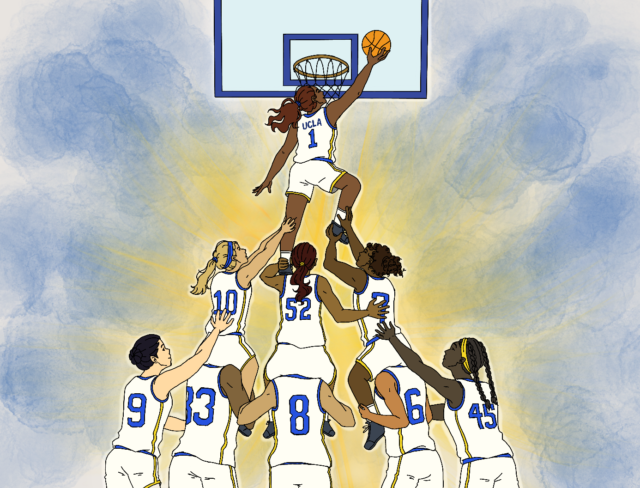
Our women’s basketball team beat the South Carolina Gamecocks 79-51 in the NCAA championship. I attended the championship party at Pauley Pavilion later that week and cheered as the team addressed the crowd of fans.
But part of me left feeling ashamed.
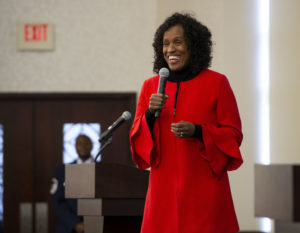
UCLA brought out Denise Curry to give a speech, but if she had not been introduced as part of the 1978 championship team in the Association for Intercollegiate Athletics for Women – which the NCAA later took over – I wouldn’t have known who she was.
Later, I learned she holds UCLA’s all-time basketball scoring record.
I was embarrassed. I, a self-proclaimed feminist and advocate for Title IX, didn’t know who Curry was until she was put in front of my face at the championship party. Yet, I could name numerous male athletes who have made their marks on UCLA.
“When you look across the board, UCLA has a rich tradition, both on men and the women’s side,” said Jackie Joyner-Kersee, a three-time Olympic Gold medalist and UCLA alumnus named the greatest female athlete of the 20th century by Sports Illustrated.
As UCLA students, we must do a better job of remembering that.
This lack of knowledge about the history of women’s sports at UCLA isn’t just a failure on my part. It’s a trend across the student body.
“No one really knows that Denise Curry is our all-time scoring leader in school history,” said Julius James, a second-year public affairs student who is part of the outreach committee for Den Operations, which runs the UCLA student section. “There’s not the same level of respect and support.”
It’s not that surprising that this discrepancy exists. Reminders of our excellent male athletes are everywhere. John Wooden watches over us on our daily commutes down Bruin Walk. We step over Jackie Robinson’s number each time we enter Pauley Pavilion. We see Arthur Ashe’s name whenever we go to our student health center.
All of these men have made exceptional contributions to our athletics programs. But so have their female counterparts.
This history is relevant. It continues to shape the athletic program in which our current student-athletes thrive.
“I really liked, obviously, the specific team for rowing, but then I also really appreciated how much history there was with every team and this school as a sports school as a whole,” said Cleopatra Tahawi, a second-year political science student on the UCLA women’s rowing team.
These women’s legacies continue to bring student-athletes like Tahawi to UCLA despite not always receiving the same support as their male counterparts. Until Title IX passed in 1972, women could play on intramural and club teams, but they had a very low budget compared to men’s sports. Even after that, female athletes faced pushback from those who feared funding would be taken from men’s sports.
Learning this history doesn’t require much effort.
“Half of it has to be curiosity,” James said.
James added that he encourages students to visit the on-campus Athletic Hall of Fame to learn more about the history of both UCLA’s men’s and women’s programs. Even a quick Google search of Evelyn Ashford, Anita Ortega or Ann Meyers Drysdale can open our eyes to the stories of female athletes often forgotten.
We also need to continue supporting our current women’s sports teams, who are smashing records and achieving new levels of success for our athletic program – such as taking home our first-ever NCAA women’s basketball title this April.
“Stay connected, understand the stories and be a voice,” Joyner-Kersee said. “You don’t have to play the sport, but if you have any connection to athletics, and especially UCLA athletics, keep women’s sports out there in the forefront, because this is a movement where you see women’s sports are on a real good trajectory.”
We may not have a statue of Ann Meyers Drysdale standing next to our statue of John Wooden or a track stadium named after Joyner-Kersee. But we can’t advocate for that change if we do not know our history in the first place.
We owe it to those athletes to make an effort.



Comments are closed.