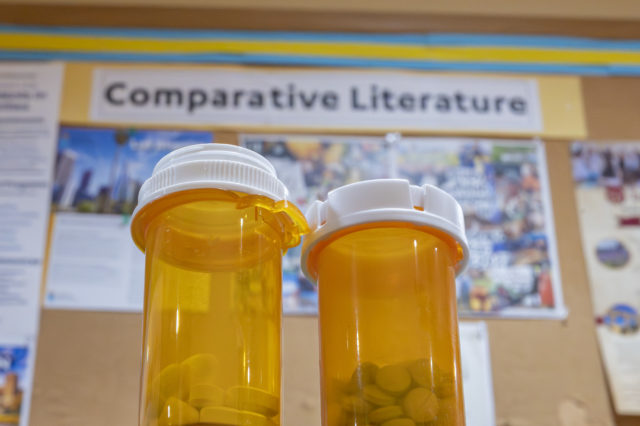
UCLA will offer a minor in health humanities starting this fall.
The minor, housed under the comparative literature department, is an interdisciplinary program that examines how health and medicine are shaped by literature, culture, history and social experience, according to the department’s website.
Students can complete an interest form in the fall if they are interested in declaring the minor, said Brianna Boling, a student services adviser for the comparative literature department.
Whitney Arnold, an assistant professor in the Department of Comparative Literature, said the department created the minor in response to students’ interest in narrative medicine.
“Health and medicine have these really important human dimensions,” said Arnold, the chair of the medical and health humanities theme in the David Geffen School of Medicine. “Students in the sciences have pointed out how it has been useful to think about what’s behind the concepts, philosophies, frameworks and methodologies informing biological ideas or perspectives.”
The minor requires students to take seven courses, Arnold said, including three electives. There are 78 available electives across about 45 departments, Boling added.
Students must take either Comparative Literature 1H: “Introduction to Health Humanities,” or Cluster 73: “All in Your Head? Brain, Bodymind, and Society,” before formally declaring the minor by emailing her directly, Boling said. She added that students can petition through the comparative literature department website to request course substitutions.
Boling said the minor will also include a research capstone, which will allow students to work with faculty experts to study broader topics in comparative literature or health humanities.
“We envision it as students coming forward with whatever project they have in mind and then Professor Arnold working to place them with faculty experts in our department or in the health humanities space overall,” Boling said.
Grace Wang, a second-year biology, comparative literature and neuroscience student who is interested in the new minor, said in an emailed statement that she is excited to meet other students who are passionate about health humanities.
“I find it is worth considering that, even for those who are not pre-health, the health humanities really concerns all of us; we all get sick, have loved ones who will get sick,” Wang said in the statement.
Alexandra Minna Stern, dean of the UCLA Division of Humanities, said in an emailed statement that the minor is important to help people understand health and illness through creative expression.
“More broadly, we are witnessing growing interest in society in general in understanding the role of human narratives in health care and in how we understand disease and wellness, especially in our post-pandemic world,” Stern said in the statement.


Comments are closed.