This post was updated Sept. 23 at 2:05 p.m.
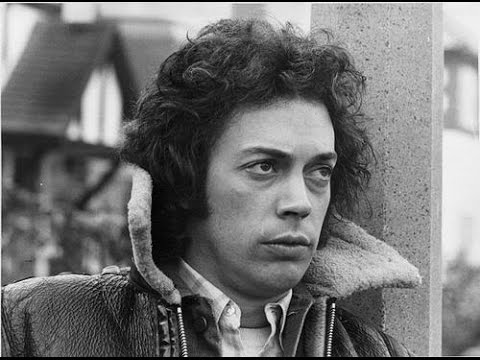
On Feb. 5, 1988, Tim Curry took the stage at a UCLA Campus Events Commission event for a Q&A with students.
Nearly 40 years later, Curry’s voice remains accessible through a digitized recording of the interview.
While at the Hollywood Pantages Theatre performing “Me and My Girl,” Curry – best known then and now for his role as Dr. Frank-N-Furter in “The Rocky Horror Picture Show” – visited UCLA and answered student questions. These included everything from audition tips, inspirations, thoughts on the industry and a request to sign a student’s Rocky Horror vinyl.
Today – a decade after the late actor’s talk was uploaded to YouTube – the digitized tape takes on a whole new meaning, offering the public a chance to revisit Curry during the height of his career.
[Related: Daily Bruin Arts honors acting legend Tim Curry’s career highlights]
Derek Bolin, the Lab Manager for the UCLA Irv Drasnin and Xiaoyan Zhao Drasnin Communication Archive, said the archive’s overall media digitization project started with seven-inch reel-to-reel audio tapes from the 1960s and ’70s, and then went on to include many cassette tapes from the 1980s, including the one used to record Curry.
The Curry interview was from a selection of tapes that Bolin started digitizing before he was officially on UCLA’s payroll, when Professor Tim Groeling, the archive’s director, asked him to work on the project.
During the earlier stages of digitization, Bolin was a contractor for UCLA. Eventually, Groeling hired Bolin to be the manager for the archive’s new lab, created to set students up to digitize the over 500,000 videotapes that remained, Bolin said.
“We had a room in Public Affairs where all the tapes were held, and I started out with just a desk and two U-Matic players,” Bolin, a UCLA alumnus, said. “When we were ready for VHS and Betamax tapes, we set up rows and rows and rows of workstations. We currently have about 40 workstations digitizing videotape. At our peak, we had almost double that. I think it was four bays, and each bay had about 18 workstations.”
The Curry interview was digitized before the creation of the lab, while Bolin was still digitizing from his living room. Had the tape been digitized later, Bolin said, he might not have gotten as good recordings as the magnetic tapes do not last very long and deteriorate over time.
Once the tapes are digital, Groeling said in an emailed statement that those working at the archive can then easily create transcripts, index the material and make the recordings more accessible to the public.
The archive’s digitization project is a part of a larger effort for engagement, said Victoria Cervantes, the social media editor for the archive.
“We’re really focused on outreach and sharing the media,” Cervantes said. “It’s really about getting stuff out there and letting people know that there is more that you can hear that you probably haven’t before from someone like Tim Curry.”
When someone becomes more prominent in the cultural zeitgeist, Bolin said, the archive sees an increase in views for its digitized materials related to that person. For example, the talk J. Robert Oppenheimer gave at UCLA in 1965 saw more interaction after Christopher Nolan’s “Oppenheimer” came out in 2023.
“People are going to want to hear him (Curry) speak,” Cervantes said. “As soon as somebody passes, the first thing we want to do is hear them speak again because that’s the last thing we heard them do.”
When a person dies, it is natural to increasingly value things they said in the past, Groeling added in the statement.
“When a person is still living, you can imagine that they’ll be able to talk about some meaningful experience or pass on another nugget of wisdom, but once they die, that future fades away,” Groeling said in the statement. “If you want to know or understand them better, you have to go back to what they said in the past.”
Cervantes said beyond Curry, the students’ questions during the interview were also notable.
“The interview was quite interesting, and he’s got this, very real, down-to-earth, isn’t afraid of telling you his opinion. Doesn’t sugarcoat things,” Bolin said. “But that also makes him seem so much more genuine because you can trust what he’s saying, and you don’t feel like if he gives a compliment that he’s just trying to be nice. It’s his honest belief that that person is a good person.”
Cervantes said she believes that recent politically motivated conversations on drag queens – given Curry’s role as Dr. Frank-N-Furter, a character who challenged the boundaries of gender and sexuality norms in “The Rocky Horror Picture Show,” – puts the 1988 interview into a different perspective.
“The movie (“The Rocky Horror Picture Show”) itself is so raunchy that you’d be kind of surprised to have schools allow a speaker from that film to come and talk,” she said. “Nowadays, it would be more likely that they’d say no. Would UCLA today still have said yes to Tim Curry then, now?”
Bolin said he is proud to be a part of the digitization project both for students who may use the library and members of the general public through YouTube.
A student writing an essay on an election, for example, could go back and watch the debates instead of doing second-hand research, Bolin said.
“It’s really wonderful to know that we have these permanent voices that are available to the public now, especially at sad times when they pass, people can go back and listen to something from them,” Bolin said. “It comforts me to know that I took part in preserving one of his interviews.”
The goal, Bolin said, is to preserve these recordings for generations to come.
Every time there is a new video format that comes out, there are always converters from the old to the new, Bolin said. Digitization likely took the physical, otherwise largely inaccessible tapes and put them into a format that can be preserved.
“1,000 years from now, somebody might be looking at this recording and glean some information from it,” he said. “That’s what I think is the most important part of this project is that we are taking it from a basement where you could only listen to it by asking someone to take you into the basement, getting the tape, finding a reel-to-reel player – all of that – to putting it on a format that is hopefully going to live forever.”
The archive’s digitization effort brings a lasting voice to those who have died and provides accessibility to their legacies.
Toward the end of the 1988 interview, Curry was asked about his early influences as a musician and an actor. After describing his love of singing in connection with Billie Holiday, Curry mentioned British actor Ralph Richardson and highlighted the actor’s longevity in a way incredibly reminiscent of what many say of Curry today.
“There was absolutely nothing between him (Richardson) and the camera or an audience that got in the way of what he meant to do,” Curry said in the interview. “If I could stagger on at 90 like him, that’s very much what I want to do.”

Comments are closed.