This post was updated Sept. 29 at 9:11 p.m.
Over portraits that show Ukrainian soldiers, children and families as they experience war, one photographer is looking for solidarity in Westwood.
Mark Neville, a Pulitzer Prize-nominated finalist and British artist who has lived in Kyiv since 2020, is the co-founder of Postcode Ukraine, a charity that delivers humanitarian aid across Ukraine alongside photography. His exhibition, “Postcode Ukraine: Diary of a Volunteer,” opened Sept. 11 and will be on view until Wednesday, and it is being presented with the Wende Museum at Westwood Contemporary, the museum’s pop-up space. Located on Westwood Boulevard, the exhibit marks the first major presentation of his photography of Ukraine in Los Angeles. All proceeds go toward Postcode Ukraine’s grassroots humanitarian work, which has funded more than $500,000 in local aid projects since 2022, according to the charity’s website.
“I’m not a political leader,” Neville said. “I’m not a military strategist. I’m not a soldier. I can’t fire a gun. But what I can do is this.”
[Related: Gift of Life at UCLA connects student donors with blood cancer patients]
After moving to Ukraine, Neville said he fell in love with the country’s food, people, architecture and what he called “a sense of freedom and tolerance.” When Russia launched its full-scale invasion in 2022, he said he had to decide whether to stay or leave. He and his wife crossed into Poland on foot with millions of others, he said.
But Neville then returned to Ukraine within four weeks and founded the charity.
“I needed to help,” he said. “I’d fallen in love not just with my wife but with the whole country, and it was really my new adopted home.”
The photographer said he rejects the idea that conflict photographers have no time to help the people in crisis. He added that he believes photographers and other artists have a moral imperative to aid those in the middle of war, as well as to document it.
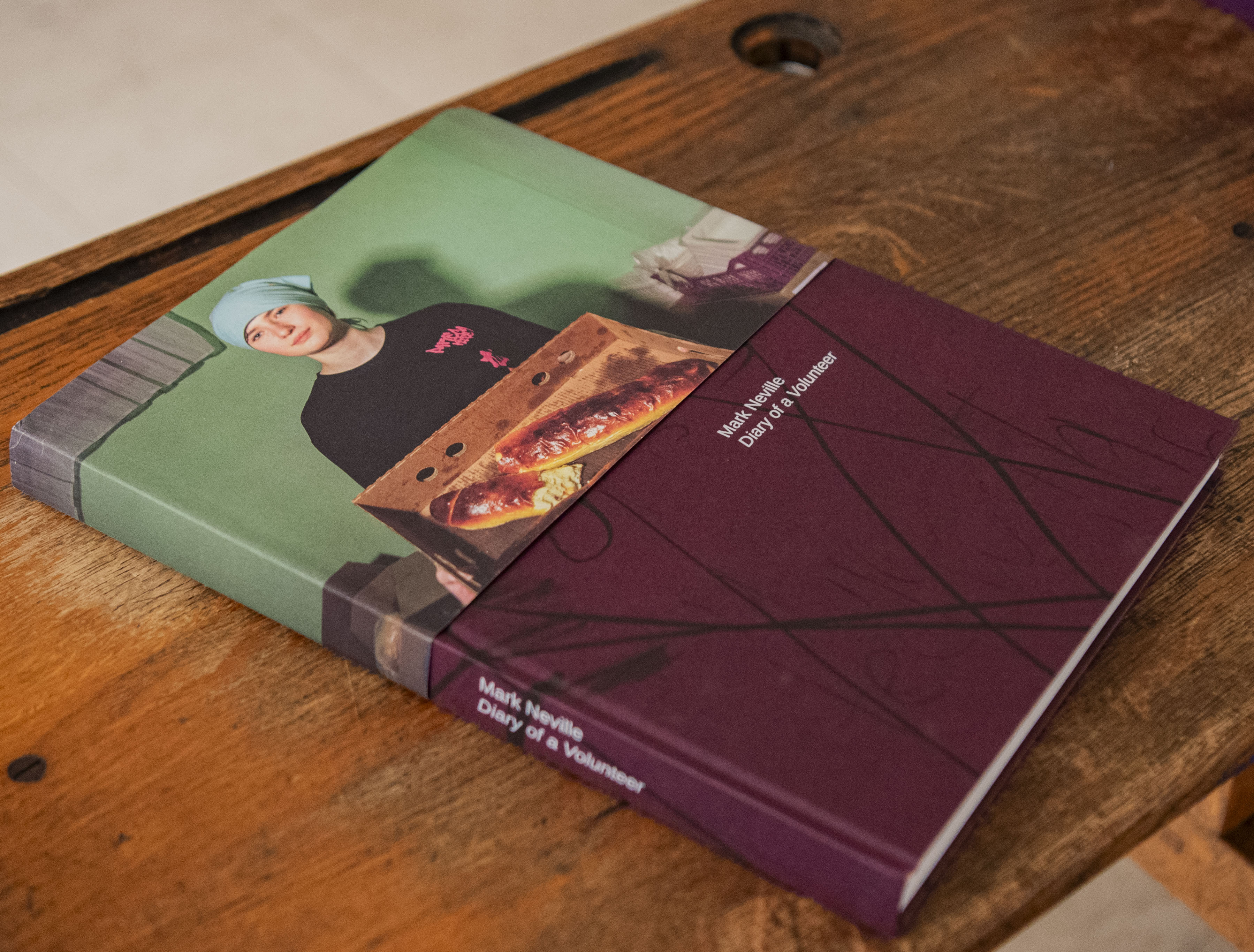
“Postcode Ukraine: Diary of a Volunteer” is based on Neville’s book, of the same name, which offers his personal record across more than 100 photographs that he collected from 2022 to 2024, as he made humanitarian aid trips to towns on the front lines of the war. The photographs in the exhibition document volunteers, families and communities living through the Russia-Ukraine war. Neville said he shoots exclusively on analog film, sometimes with a large plate camera that can take around 30 minutes to set up on a tripod. He added that he commits to this technique even in war zones because he wants to offer a different kind of visual information than the digital cameras of photojournalists, who prioritize quickly and accurately documenting events as they unfold.
Neville compared photographing war to a sun: too large to look at directly. Meaningful images come from looking at their shadows – the smaller stories of people living their day-to-day lives – he added.
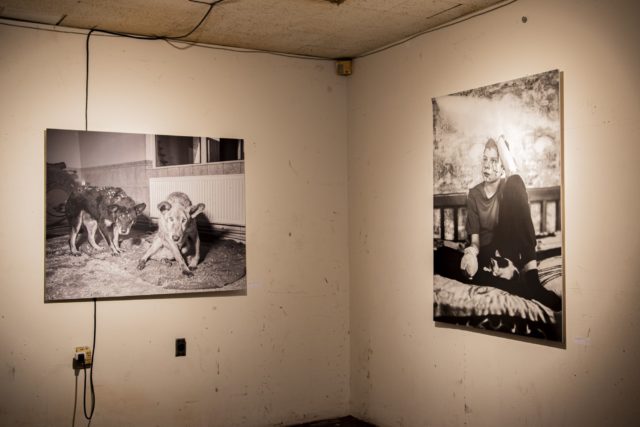
The photographer said the choice between black-and-white and color images is not always easy to explain. Neville mentioned one photograph displayed in the exhibition that depicts schoolchildren sitting on a burned-out bus that was targeted and shelled along with a nearby school. The children pictured attended the school and would have been killed had they been there at that moment, he said.
“There was a sense in which I saw these children in the photograph almost as ghosts,” Neville said. “Because they could have been ghosts – they could have been materially killed.”
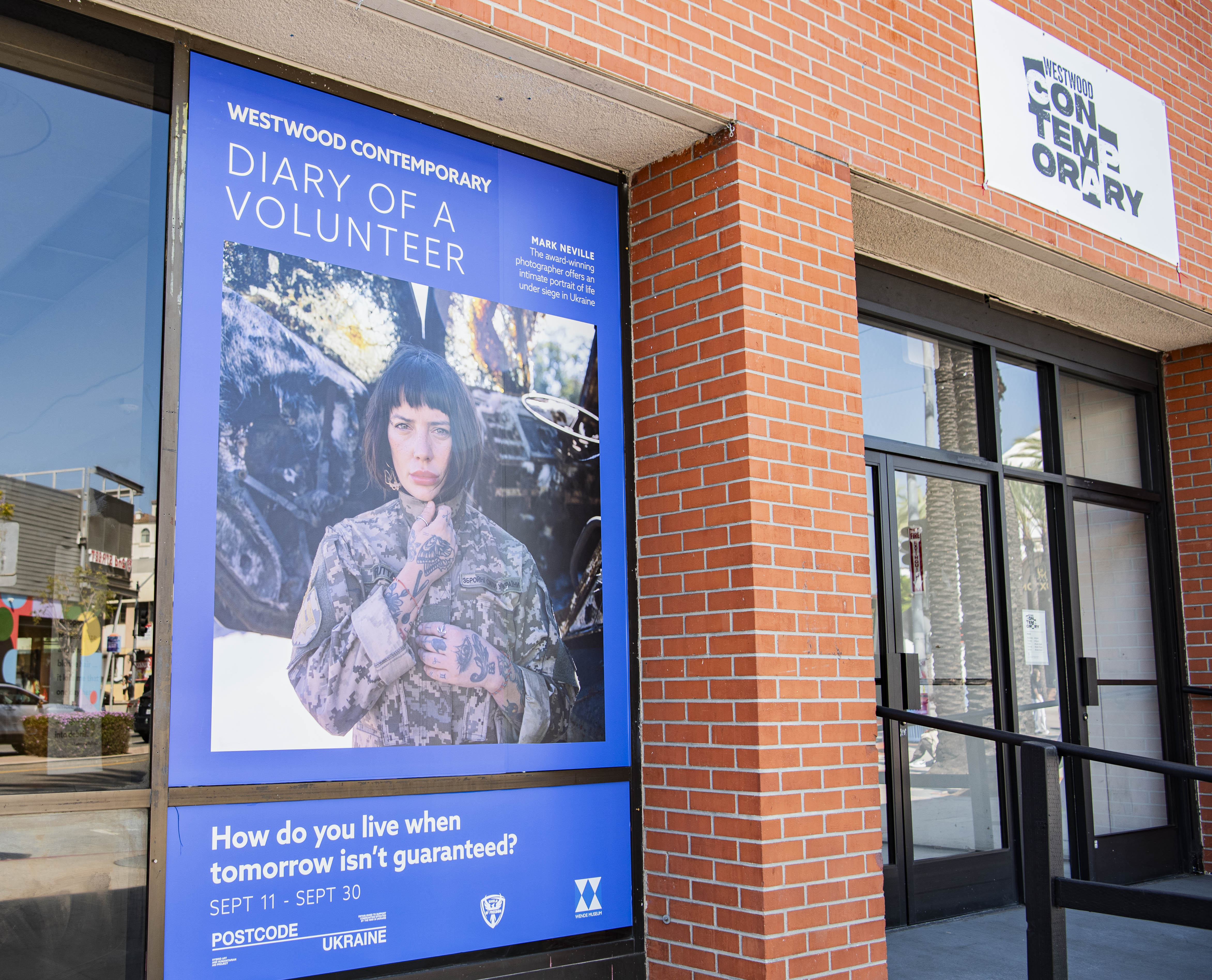
The exhibition’s central image, a color portrait of a woman in a military jacket, is printed on vinyl outside the gallery entrance. Neville said the subject is Sasha, a stylist-turned-soldier. He said he photographed her three times after the first invasion.
Neville added that Sasha’s boyfriend was killed about a month before the portrait was taken and that she died two weeks after the session.
“She was just one of those people you could never imagine not being around,” Neville said. “You thought they’re kind of invincible somehow, and she wasn’t.”
The exhibition has multiple guest curators, some including Prince Harry, Alyssa Milano and Sharon Stone – who each selected one photograph and wrote a reflection on it. Their responses appear on banners placed in the middle of the gallery.
Lara Salmon, an LA-based artist and guest curator, said guest curators received a folder with the photographs and a short narrative explaining each one. She said some accounts described women killed weeks after being photographed, while others described how women concealed their partners’ military service to protect themselves from sexual violence by Russian troops.
Salmon chose a portrait of Artem, a boy who found a bullet in his yard and tried to make something out of it before it exploded. She said she was moved by the image, showing Artem’s visible wounds on his face and bandaged hand.
“There’s a sadness of an innocence that gets taken away from these children,” Salmon said. “Even through the periods of perceived peace during these horrific invasions and genocides, children are still in danger, and children are always the victims.”
[Related: From punk rock to PhD, Candace Hansen documents queer music]
Justinian Jampol, a UCLA alumnus and founder and executive director of the Wende Museum, said the project changed how he thinks about historical distance. He recalled being on a video call with Neville and hearing air raid sirens. For Jampol, the distance that existed between LA and Kyiv disappeared at that moment.
“Context is everything,” Jampol said. “The images couldn’t possibly exist to their full potential without the understanding of the situation in which it was created. In their own right, they’re aesthetically so moving and strong. When you layer on the knowledge of what’s going on around it, it’s just something that stays with you.”
Neville added that now is an extremely critical time for Ukraine, with explosions happening almost every day. He said a recent strike near his local supermarket reminded him why the exhibition feels so urgent.
“It is this critical moment,” Neville said. “We need to feel that solidarity with people from Los Angeles and all over the world.”

Comments are closed.