ASUCLA doesn’t need to run a survey to know students don’t want to pay another fee, let alone for a to-go box. The results of last year’s USAC elections make that quite clear.
The Bruin Life and Undergraduate Experience Fee Referendum would have added a $27 quarterly fee to undergraduate students’ BruinBills. The fee would have funded ASUCLA operations and identity-based Student Media publications, among other programs.
The referendum failed due to low turnout, but only 37% of participating undergraduates voted in favor of it. So why, then, is ASUCLA finding alternative means to burn holes in our pockets?
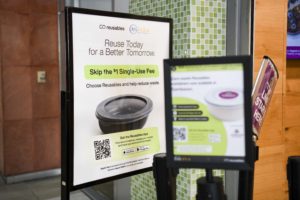
In June, various ASUCLA-operated locations began charging a $1 fee for single-use food containers to support ASUCLA’s partnership with Reusables, a company that provides trackable food containers that students can use and return within five days at no cost.
ASUCLA’s concern for sustainability is commendable, but its commitment to making students pay for it is quite the opposite. Amid tuition hikes and cost-of-living increases, suddenly charging extra for something as simple as a to-go box is nothing short of tone-deaf.
If ASUCLA wants students to be enthusiastic about Reusables, it should reward Bruins who opt in, not raise prices on students who opt out. Introducing a fee after students voted against one shows that ASUCLA isn’t concerned with how its decisions impact students – the demographic it’s meant to support.
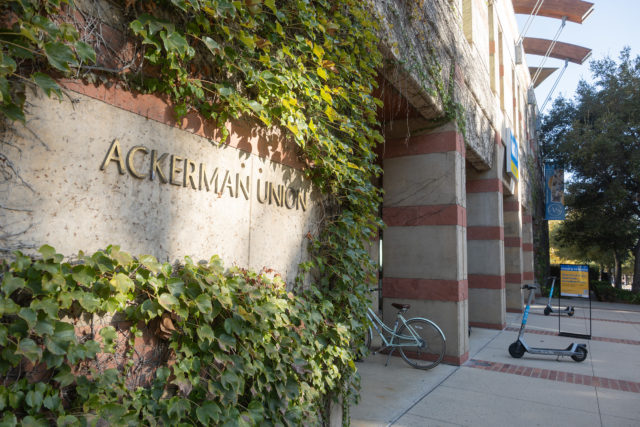
ASUCLA began its collaboration with Reusables in 2024 at Greenhouse in Ackerman Union. Before the $1 fee, opting into the program required inputting personal information and creating a unique ID. Now, customers simply tap their cards twice at checkout, and the process is complete.
Choosing Reusables may be convenient, but it shouldn’t feel required.
Daniella Yacoubian, a third-year biochemistry student, said a rewards program would create a more positive impression of the Reusables partnership among students.
“It’s an incentive versus a punishment for not choosing it,” she said.
Of course, single-use to-go boxes come at a cost. An ASUCLA spokesperson told the Daily Bruin that ASUCLA pays for the compostable packaging and its disposal using the revenue from the fee.
But who was paying for it before?
When a once-built-in cost becomes an added charge, consumers have a right to question where their money is going.
An ASUCLA spokesperson said in an emailed statement that ASUCLA is facing higher costs from its sustainability measures, including waste handling, the Reusables partnership and other expenses. The spokesperson added that the failure of the BLUE Referendum and the lack of additional ASUCLA funding it would have provided has put pressure on the organization amid rising operating costs.
“ASUCLA is therefore pursuing other avenues to manage these pressures, including controlling operational costs to the extent possible,” the spokesperson said in the emailed statement.
Bruins are no strangers to rising expenses. They’ve been covering ASUCLA’s for decades.
During the 2004-05 school year, the quarterly Student Union Fee, which helps fund ASUCLA projects and services, was only $7.50. Now, students pay $27. After adjusting for inflation, that is still double the 2004-05 figures.
As Bruins navigate disproportionately high attendance costs in addition to their studies, their student association must exhaust all its options before introducing new charges.
Students could instead earn a point for each meal they choose to eat with Reusables, eventually collecting enough points for a free or discounted meal. Such a system would effectively bolster the Reusables partnership, while encouraging students to return to ASUCLA-operated restaurants.
“As students, we already pay so much,” said Seri McMahon, a fourth-year sociology student. McMahon added that she wondered why the school would choose to charge students for sustainable measures rather than shouldering the cost itself.
Creating fees when the community didn’t vote for any is not a student-centered move – it’s a business-centered one.


Comments are closed.