
A $11.25 billion bond on the November ballot aims to fund the construction of affordable housing, including for veterans and UC students.
The measure, if passed, would provide subsidies for up to 40,000 new affordable homes, according to the Legislative Analyst’s Office. The California State Legislature placed the bond on the ballot.
[Related: Bond with $350 million for student housing to appear on general election ballot]
About $350 million included in the bond would fund the construction of student housing, with the money split evenly between the UC and California State University systems. The measure would fund up to 1,200 beds, according to the Legislative Analyst’s Office.
“The University looks forward to working with our state partners to continue building more student housing and driving down housing costs for students across our campuses,” a spokesperson for the UC Office of the President said in an emailed statement.
Shane Phillips, the housing initiative manager at the UCLA Lewis Center for Regional Policy Studies, said it is not clear how much of this money will be used to support UCLA.
“I would not be surprised if UCLA actually gets a smaller share relative to its population because it already has a lot of student housing,” he said.
UCLA is the only UC campus to guarantee four-year housing for students. The university has worked to maintain this promise by constructing new buildings, converting many on-campus dorms from doubles to triples and increasing capacity in University Apartments by offering 10-person units for the 2025-26 school year.
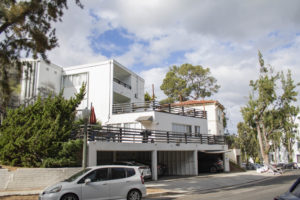
The university converted Weyburn Terrace into undergraduate housing last summer to allow it to fulfill its guarantee.
[Related: UCLA to turn Weyburn Terrace from graduate to undergraduate housing]
“The idea of 10 people being crowded into a medium-sized room is egregious,” said Kristian Suazo, the president of the UCLA chapter of the Student Homes Coalition. “They can’t keep cramming us into 4/10s. We need more housing here.”
Students aren’t always happy with the conditions in university-owned housing, Suazo said, but high market prices charged by private landlords mean other options aren’t necessarily affordable either.
The average monthly rental price for a two-bedroom apartment in Westwood is $5,400, according to rental site RentHop. UCLA charges $4,854.52 a month for a two bedroom apartment, split four ways.
“Even if we try to make a unit affordable, whether it’s truly affordable to a student is a separate question,” said Monica Davalos, a senior policy fellow at the California Budget and Policy Center.
Phillips said that while important, the construction of these affordable units will likely not impact prices in the overall housing market.
“This is a bill to produce affordable housing – it is not a bill to make housing affordable,” he said. “But for the people who are able to move into those homes, they’ll probably be paying a lot less in rent, and affordability will improve dramatically for many or most of them.”
Because these affordable units are required to be built with a minimum 55-year lifespan, each new home will serve multiple families over time, Davalos said.
Proposition 1 would also fund supportive housing, down payment assistance and loans for low-income Californians and veterans, rehabilitation and preservation of existing affordable housing and money for housing-related infrastructure.
Affordable housing hasn’t received substantial funding from the state budget for a long time, which increases the importance of having alternative funding sources such as the bond, Davalos said. There are shovel-ready affordable housing projects with developers just waiting for funding to make construction possible, she added.
“It’s just gotten very, very expensive to build subsidized affordable housing,” Phillips said. “Housing affordability is very bad in California.”
Because the proposition is a bond measure, it would not result in increased taxes immediately, Phillips said.
Instead, the 30-year bond would be paid off with long-term General Fund debt-service payments, which can reduce flexibility in the state’s budget, Davalos said.
Proposition 38 – another bond on the ballot – which would fund immunology research, faces the same tradeoffs. Together, the debt-load of the two bonds would be over $1 billion – about 0.4% of last year’s $251 billion general fund budget, she added.
“That means there’s less money that we can put into mitigation efforts for food assistance, for healthcare,” Davalos said.
[Related: Will Proposition 38’s $8.4B bond help or harm research?]
Suazo said he and many of the students he’s spoken with support the proposition. The bond has no registered opposition in the California voter guide.
“It will help get more students housed at a time when the market’s already super unfair towards us,” he said.
Students can vote in the Nov. 3 midterm elections at one of several locations on UCLA’s campus and in Westwood, including Ackerman Union, De Neve Plaza and the Hammer Museum.



Comments are closed.