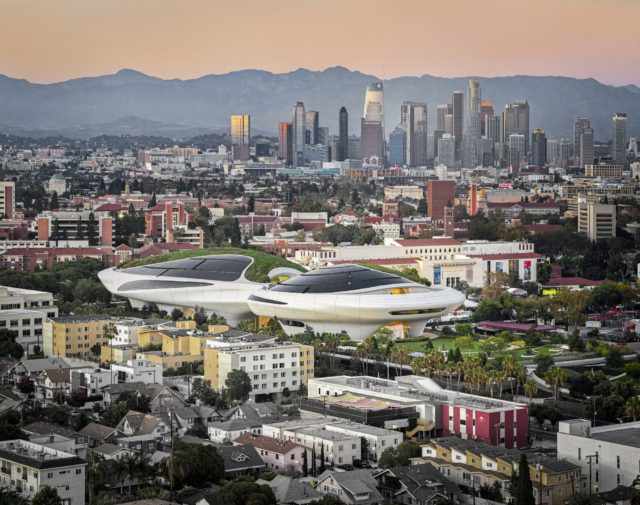


The Lucas Museum of Narrative Art perfectly narrates what a museum should be.
Founded by “Star Wars” filmmaker George Lucas and his wife, businesswoman Mellody Hobson, the Lucas Museum showcases diverse styles of visual storytelling, such as painting and comic art. The museum, located in Exposition Park near the University of Southern California, opened to the public Sept. 22 and features more than 30 galleries, as well as a free research library and public gardens. The Lucas Museum is an accessible, minimalist space that excels because of its ability to prioritize the visitor’s experience of simply enjoying art without needing to unpack every historical layer.
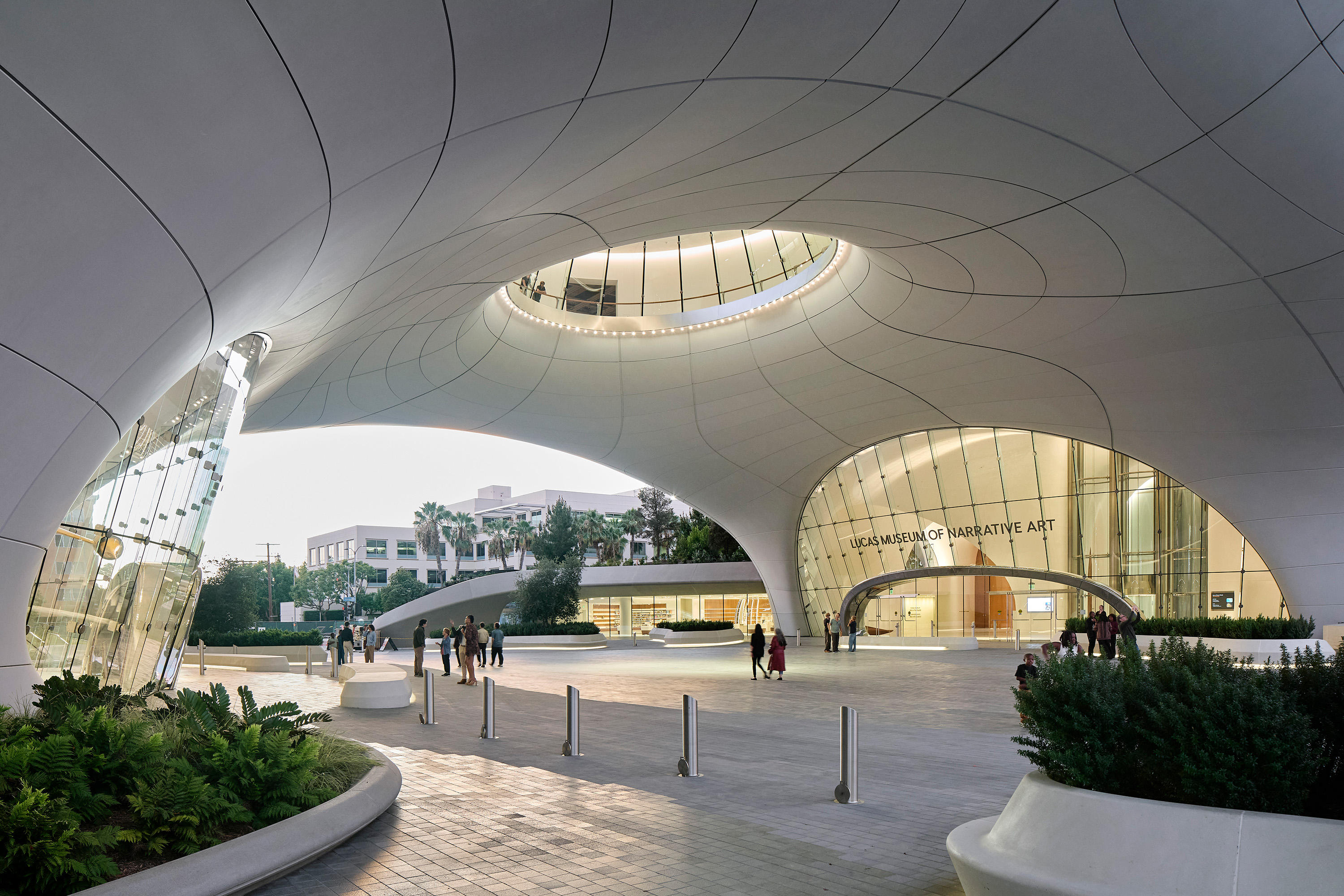
The museum is easy to navigate to and from UCLA using the Metro E line – which is free for UCLA students using their TAP cards. Upon arrival, visitors are greeted with a stunning silhouette of the building. Sleek curves and modern edges make the museum feel reminiscent of a spaceship. The grounds are relatively straightforward to navigate, with a central atrium where visitors can choose to go to either the public library or the full museum, which contains two movie theaters and access to the variety of galleries.
[Related: This UCLA alumnus is making art you’ve never seen before – including life-size dolls]
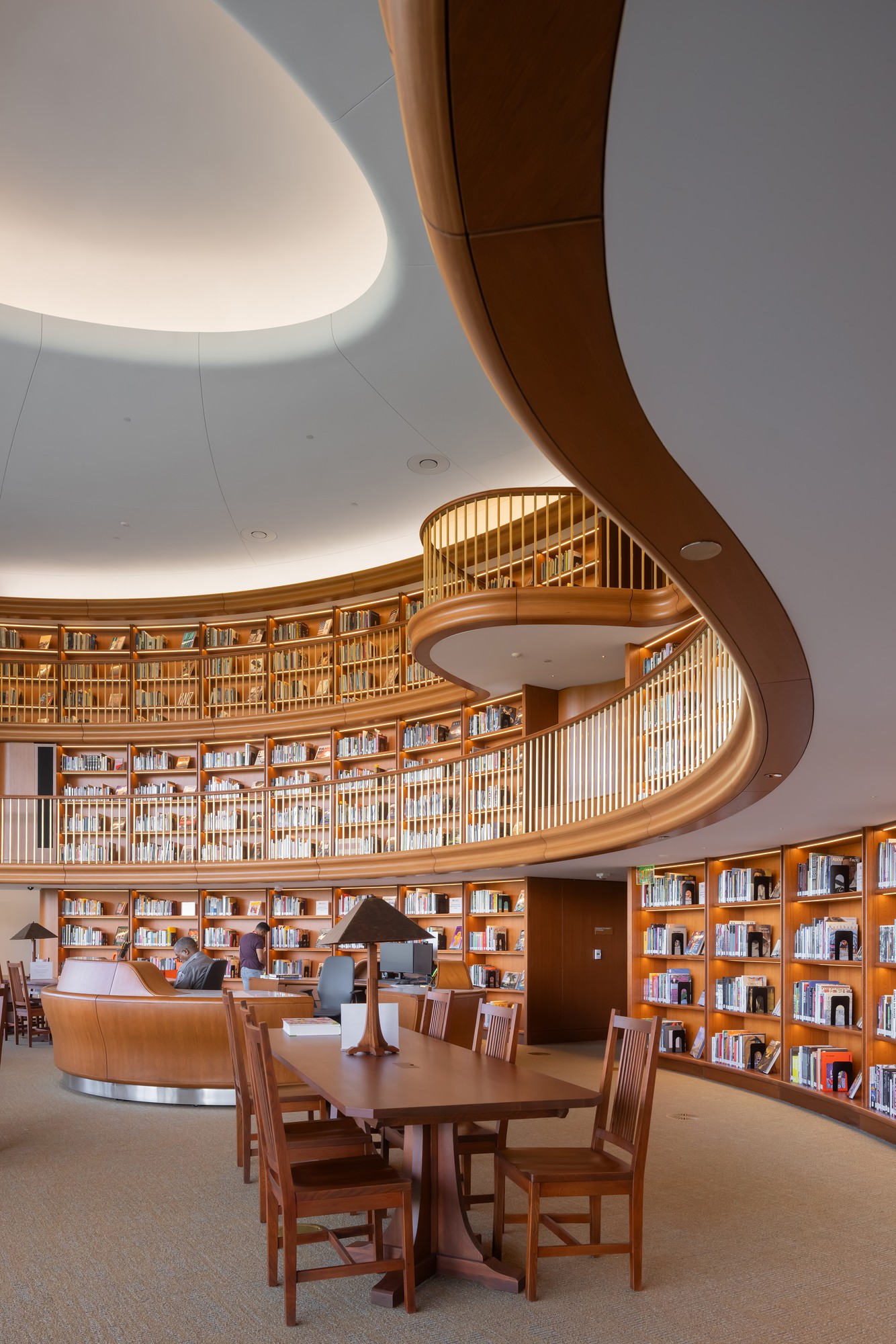
The museum’s library is a quaint area, with deep brown wooden tables and bookshelves that make the space feel warm – perfect for an afternoon of great studying. Opposite the entrance is a wall of full floor-to-ceiling windows, bathing the room in bright Los Angeles sun.
The library’s collection includes a variety of pieces, from comic book collections to compiled images, that encapsulate the art style the museum was built to celebrate. Although the space is relatively small, its open access to the public makes it an interesting spot to explore for those who want to engage more deeply with narrative art pieces by letting them read more about the history and evolution of the style through the library’s selected collection.
Across the atrium sits the crown jewel of the museum: its numerous galleries and two movie theaters. On the first floor, visitors first walk through “The History of Narrative Art: Heroes, Myths, The Sacred,” an exhibit meant to introduce visitors to the meaning and history of narrative art.
The gallery flips the traditional concept of an exhibit on its head. Rather than having real paintings hanging, the space uses digital screens to project famous paintings, statues and more from various cultures and across historical periods. Visitors can walk through and see an interior view of the Hagia Sophia Grand Mosque in Istanbul, then walk on over to see the bold outlines and vibrant colors of paintings by Utagawa Kuniyoshi, a Japanese woodblock print artist. The space is nothing like what one expects from a typical gallery but serves as a simple yet powerful introduction to what narrative art means. There is no complicated historical context to understand – anyone can walk through and simply appreciate the aesthetic of the variety of narrative art pieces.
After walking through the introductory gallery on the first floor, visitors are shepherded towards the elevators up to the fourth floor. Although the elevator lines are considerably long, the museum staff keep them moving quickly to ensure a quality experience.
Up on the fourth floor lies a maze of galleries, with each having succinct, one-word titles that capture their essence. “adventure” features an Indiana Jones statue, while “love” features comic book-style drawings from Alex Toth and Vince Colletta. Once again, the galleries are simplistic. There is no detailed background and confusing history to read through at all. Paintings are accompanied by simple placards of the piece’s name and artist, rather than sharing extensive detail about the work’s origin. Instead, visitors are able to walk through the space and feel the emotions and stories of the narrative art placed carefully in front of them. This design makes the entire visit more enjoyable – rather than focusing on extensive interpretation, viewers can simply feel each gallery’s distinct atmosphere.
One of the standout exhibits, as expected, was the Star Wars gallery. Containing large models of ships and machines from the franchise, in addition to life-size models of Luke and Leia Skywalker, the space is any Star Wars superfan’s biggest dream. Some visitors even came dressed in floor-length brown robes, mimicking Obi-Wan Kenobi’s style as they posed alongside character replicas. Lucas’ flagship movie series is an obvious major draw of the museum, and the gallery stays true to its name by using visual objects and drawings to tell a story about creating the iconic science fiction saga.
Another unique aspect of Lucas Museum is the diversity of art styles represented. Galleries like “comics” and “manga” feature more animated, comic book-style art that is modern, colorful and eye-catching. Visitors will be pleasantly surprised to see paintings of Donald Duck and Superman on the walls at the vast museum. Other galleries, such as “Norman Rockwell,” feature more classic paintings that feel expected for a museum setting, with iconic pieces such as “Triple Self-Portrait.” The fifth-floor “murals” gallery features a wide breadth of Banksy paintings, bringing a pop of color and creativity.
[Related: Postcode Ukraine: In the shadows of war, a photographer looks for stories of solidarity]
While the museum’s simplistic style is easy to approach and makes for a casual museum-going experience, it is also one of the biggest drawbacks of the space. Having so many galleries occasionally makes the exhibits feel hard to navigate, as the galleries themselves are incredibly small, forcing visitors to move through them quickly. At times, there also appears to be a lack of organization to the pieces. Although there is an entire Norman Rockwell collection, for example, the artist’s works are also featured in numerous other galleries, almost defeating the purpose of having a gallery dedicated to the artist.
Regardless, the Lucas Museum’s simplicity remains its strongest tool. The museum is an approachable space, with an air of casualness that implores visitors to bring their families and meander around the countless galleries all afternoon.
If there is a story to be told within the space, its main theme would be that the Lucas Museum is a must-visit spot in LA.




Comments are closed.